Sunday, 4 February 2018

Sydney history in stone


What are the chances 2 different books on a linked but largely unknown obscure topic both arrived within days of each other?

‘From quarantine to Q Station : honouring the past, securing the future’ by Dannielle Viera, Jennifer Cornwell, Simon McArthur, Dr Peter Hobbins, Dr Annie Clarke, and Dr Ursula Frederick.

Once home to generations of Aboriginal people attracted by the abundance of seafood, the deep coves, fresh breezes, clean water supply and remoteness from the fledgling colony of Sydney made North Head at the entrance to Sydney Harbour an ideal place for the creation of a quarantine area.

Before the development of modern medicine, infectious diseases posed a major public health threat. The only known means of protecting communities from outbreaks was to isolate sufferers and those with whom they had been in contact. 
Q Station with Sydney behind

For immigrants in the 19th and early 20th centuries who had already endured the long voyage to Australia, quarantine could be a frightening and traumatic experience. Separated from healthy family members, those in quarantine had no way of knowing whether they would see their loved ones again. Some children left the Quarantine Station as orphans, and some women as widows, alone in a strange country with no means of support. 
The accommodation at Q Station

‘From Quarantine to Q Station’ tells the fascinating story of the evolution of this site, from its early days as the colonial Quarantine Station through its transformation to the peaceful accommodation and conference facility now known as Q Station. 
 
The wharf and arrival area of the station with the rebuilt hospital on top of the hill

Richly illustrated with more than 200 colour, sepia and black & white photographs, many dating from the late-1800s, this captivating, well-researched book takes readers on an evocative journey through time. Newspaper articles, archaeological research and anecdotes from detainees bring the past to life, while modern preservation and restoration efforts are described in fascinating detail.

The main street in the mini settlement of the quarantine station


Sailing to Australia from Lincolnshire aboard the the ship the "Canton" in 1835, 16-year-old John Dawson watched in alarm as three of his sisters developed smallpox. Although all survived this dreaded disease, their faces bore tell-tale scars for the rest of their lives. Yet John left an even more enduring memento of his family's perilous voyage in the soft sandstone of North Head.

Carving a lengthy message proclaiming that the Dawsons had landed here to perform a month's quarantine, John began a tradition that continued until Sydney's Quarantine Station finally closed in 1984.

During its 150 years of operation, nearly 16,000 people were held in isolation on this headland. Interned for days, weeks or even months, many followed John's example, leaving an extraordinary gallery of more than 1600 carved and painted sandstone inscriptions.


Combining intensive archaeological investigation and historical research, this book illuminates Australia's past through the portal of these intriguing and often evocative inscriptions, as well as North Head's numerous headstones. 

Drawing upon historical records, diaries and other writings, the book highlights the dramatic personal and social effects of diseases that once terrified the community. This book conveys the compelling personal stories of lives lived not just in despair, but also in hope for the future. 

Wednesday, 24 January 2018

Done too soon


Like many was saddened to hear Neil Diamond announce he was retiring from touring performances due to suffering the effects of Parkinson's Disease.

As again like many I grew up with 'Hot August night", and we were all excited to be allowed to stay up and watch his 1976 Sydney concert on tv (provided we had got changed into our pjs prior). 
It was a great concert performance, he gave that guitar a real work-out. 
Can still remember his explanation of where "Song sung blue" came from - a Mozart piece.  

Believe "Cherry cherry" opened the concert (thanks Andrew C. on YouTube).
It seems more and more of the inspiring writers, performers, actors that I've watched, read and listened to are succumbing to the ills of mere-mortals - live long in our minds and memories, and get a cure for Parkinson's.

Monday, 8 January 2018

The time has come


Got a spare hour or two?
The first five George R.R. Martin books of the "A song of ice and fire" (what many people recognise as "Game of thrones") has been released by Oakhill/Ulverscroft on audio CD - all 202 - two hundred and two - hours of narration.
Winter is coming. Such is the stern motto of House Stark, the northernmost of the fiefdoms that owe allegiance to King Robert Baratheon in far-off King's Landing. There Eddard Stark of Winterfell rules in Robert's name. There his family dwells in peace and comfort: his proud wife, Catelyn; his sons Robb, Brandon, and Rickon; his daughters Sansa and Arya; and his bastard son, Jon Snow. Far to the north, behind the towering Wall, lie savage Wildings and worse--unnatural things relegated to myth during the centuries-long summer, but proving all too real and all too deadly in the turning of the season. Yet a more immediate threat lurks to the south, where Jon Arryn, the Hand of the King, has died under mysterious circumstances. Now Robert is riding north to Winterfell, bringing his queen, the lovely but cold Cersei, his son, the cruel, vain glorious Prince Joffrey, and the queen's brothers Jaime and Tyrion of the powerful and wealthy House Lannister--the first a swordsman without equal, the second a dwarf whose stunted stature belies a brilliant mind. All are heading for Winterfell and a fateful encounter that will change the course of kingdoms. Meanwhile, across the Narrow Sea, Prince Viserys, heir of the fallen House Targaryen, which once ruled all of Westeros, schemes to reclaim the throne with an army of barbarian Dothraki--whose loyalty he will purchase in the only coin left to him: his beautiful yet innocent sister, Daenerys.
An entire monumental cycle of books: 1. "A game of thrones", 2. "A clash of kings", 3. "A storm of swords" (3.1 "Steel & snow" and 3.2 "Blood & gold), 4. "A feast of crows" and 5. "A dance with dragons" (5.1 "Dreams & dust" and 5.2 "After the feast") epic high fantasy with a multitude of characters.

Wednesday, 20 December 2017

Our first casuality found

An update on a blog post from 2014 "Our first causality", with news today that the AE1 has been found.
Australia’s first submarine HMAS AE1 has finally been located, ending a 103 year maritime mystery.
The fate of the 800 ton AE1 and her 35 crew members has remained one of the persistent mysteries of Australia’s military history, after it was lost off the Duke of York island group on 14 September 1914 with all personnel aboard.
It was the first casualty for the Royal Australian Navy and the first Allied submarine loss in World War I; a significant tragedy felt by our nation and our allies.
The AE1 at Portsmouth in 1914
The Royal Australian Navy teamed up with a range of search groups in this expedition to locate the submarine, funded by the Commonwealth Government and the Silentworld Foundation, with assistance from the Submarine Institute of Australia, the Australian National Maritime Museum, Fugro Survey and the Papua New Guinea Government. The expedition embarked on the survey ship 'Fugro Equator' equipped with a team of maritime surveyors, marine archaeologists and naval historians who scoured the search area with a multi-beam echo sounder and side-scan technology in an underwater drone flying 40 metres above the sea bed on pre-programmed 20 hour missions.
Survey data showing the AE1 on the sea-bed (cC.of A.)
They located an object of interest in over 300 metres of water. Upon further inspection, confirmed the object to be AE1. The data collected was analysed and a three-dimensional rendering of the underwater environment was produced before dropping a camera to confirm the find.
The first images captured by the expedition show the vessel is remarkably well preserved and apparently in one piece. 
Battery ventilation trunks of the AE1 (cC.of A.)
Following the discovery of the submarine, a small commemorative service was held by those on-board the survey vessel to remember those officers and sailors who lost their lives 103 years ago. Efforts are being made to contact the descendants of the crew.
The Australian Government will work closely with the Papua New Guinean Government to consider a lasting commemoration and recognition of the crew of AE1 and to preserve the site.
The information gained from this expedition and from the research to date will greatly assist in unravelling the mystery of the loss of HMAS AE1, and will be held by the Australian National Maritime Museum for future generations to remember. More underwater images at the Navy.gov.au site.
Helm of the AE1 (cCommonwealth of Australia)
Lest We Forget.

Monday, 20 November 2017

Abandoned photography


"Abandoned : the most beautiful forgotten places from around the world "
by Mathew Growcoot, a photographic book of the dark yet hauntingly special places.

The places time forgot. From the magical empty theatres of Detroit to the lost playgrounds of Chernobyl, there are places across the globe that were once a hub of activity, but are now abandoned and in decay. With nature creeping in and reclaiming these spots, we are left with eerie crumbling ruins and breathtaking views that offer us a window into the past and capture our imagination.
"Abandoned" showcases the very best photographs from around the world documenting this phenomenon. More immersive than a museum, abandoned photography has given the world an exciting way to look at times gone by and the places we have long neglected. The images captured provoke questions about earlier times, mans' futility, and the relentless power of nature.
The book was compiled and curated by photographer and former urban explorer, Mathew Growcoot from Birmingham in England. Below are just some of his images of industry, landscapes and the built environment post usefulness.
 Part of the incline at the abandoned Dinorwic Quarry, which lies between Llanberis and Dinorwig, near Bangor in Wales, UK. It was once the largest slate quarry in the world.

Nature reclaiming a derelict building

 An old locomotive in the Istvantelek Rail Workshop, Budapest, Hungary

To view more of Mathew's photographs borrow "Abandoned".

Wednesday, 1 November 2017

Above and beyond

Nick Rains latest book "Aerial Australia" is beautiful, and reminds us that depending on the angle there is beauty in just about everything.
In this case the angle is from an aeroplane, but the proliferation of drones is likely going  to make the rarity of aerial photography more commonplace.


There's nothing like the thrill of looking out the window of an aircraft and seeing the world from above, and in "Aerial Australia", Nick's photographs reveal Australia as it's rarely seen, revealing a whole new side of its beauty. It offers sweeping views of Australia's cities; dramatic glimpses of its Outback sand dunes and epic waterfalls; a new perspective on Australia's coral reefs and coastal fringes, and a new way of looking at Australia's countryside. These hundreds of stunning photographs turn industrial scenes and winding rivers into abstract art. 

Nick Rains has been a professional photographer for over 30 years, starting off in the UK with sports and commercial work before moving to Australia in 1990. Since then he has specialised in travel and landscape work, crisscrossing the country on assignments for publishers. His work involves packing up his 4WD and heading off into the wilderness for weeks at a time, driving tens of thousands of kilometres and camping out under the stars in a never-ending quest for the perfect light.  

Here are just a few of the images in the book-
 
The solar reflectors at White Cliffs, N.S.W.

The everyday reflected in White Cliffs, then the everyday transformed with a red car on a road crossing the shallow Wallaga Lake near Bermagui.


The unexpected - headstones in Melbourne General Cemetery


This beautiful keepsake casts Australia's beauty in a whole new light. 
And talking about drone photography, I was recently impressed with Jaimen Hudson, check out his website for more stunning photos, especially those around Esperance.

Here is the link to Nick's website, and other books by Nick Rains.

Monday, 25 September 2017

Intellectual secrets

I was sent a link to an article by James Somers titled 'Keepers of the secrets' which relates to his experience when visiting the archives division of the New York Public Library.


The most quotable quote from the article has to be - 

"The real work, though, in processing a collection, is intellectual. The goal is to make the files you’ve received findable"
In an age when people say Google has all the answers to your information questions, and when economic rationalists question the value of extra time and effort expended on a bibliographic record, this is a refreshing affirmation.
Go James!
James Somers is a writer and programmer based in New York.

Thursday, 21 September 2017

Pleasant Creek sold

Further to a previous post - "Abandoned in Pleasant Creek" way back in February 2008, the site was finally been leased.

According to the Stawell Times News Keenan Quinsee from Ballan is the new owner of the old hospital buildings.
He intends to clean up the site and then operate Aradale-style ghost tours.
Keenan also has other potential ideas for utilising some of the buildings (Christmas in July festival next year, a weekend night market, live music events in the summer, a bean bag cinema, wine bar and cafe and a three-dimensional artistic mural), including the very utilitarian looking concrete offices near the highway as retail space.

Monday, 26 June 2017

The Glenelg


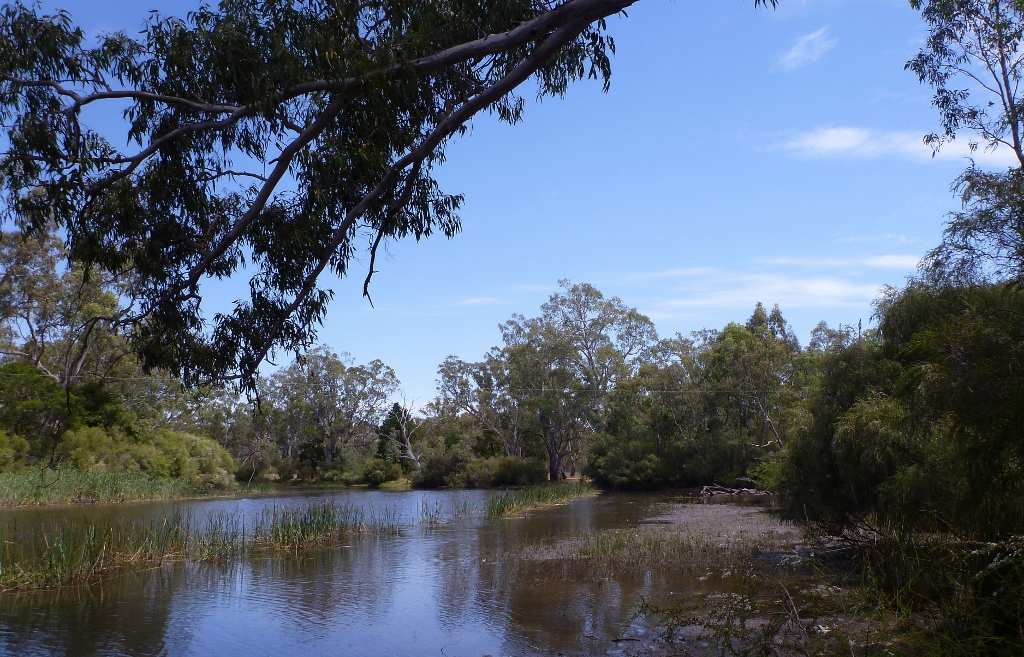
The Glenelg River rises from its source in the southern Grampians (near the Chimney Pots) and flows over 350 kilometres to Nelson on the coast, where it empties into Discovery Bay. 

It passes spots like the road-side camping area at Cherrypool, the rail bridge at Kanagulk, the town of Harrow, and flows into and out of Rocklands Reservoir and through the Lower Glenelg National Park.

Cherrypool
The Fulham Bridge at Kanagulk
Rocklands

Canoeing on the Glenelg at Harrow


< A bend of the Glenelg as it passes below the Princess Margaret Rose Caves near Nelson.